
Golf performance depends heavily on technique, practice, and equipment selection. According to data from the National Golf Foundation, over 26 million Americans play golf annually, while equipment fitting continues to influence scoring performance significantly. Understanding how to hit better shots using the best golf irons can help golfers improve accuracy, distance control, and consistency. Whether you play recreationally or competitively in the USA, selecting suitable irons and using them correctly creates measurable improvements on the course. This guide explains practical methods, swing adjustments, and strategic approaches that produce better golf shots.
Understand Why Golf Irons Matter
Golf irons influence launch angle, spin rate, forgiveness, and shot control. Therefore, choosing the right iron set directly affects performance outcomes.
Modern iron technology improves consistency across different skill levels. Consequently, players can achieve better distance management and shot accuracy.
Choose Irons That Match Your Skill Level
Many golfers purchase irons based on popularity rather than personal needs. However, selecting clubs according to your experience level produces better results.
Game Improvement Irons
These irons feature larger sweet spots and increased forgiveness. As a result, beginners and high handicappers experience more consistent shots.
- Higher launch angles
- Greater forgiveness
- Wider soles
- More distance assistance
Players Distance Irons
Intermediate golfers often benefit from players distance irons. These clubs balance forgiveness with enhanced shot shaping capabilities.
- Improved control
- Moderate forgiveness
- Compact appearance
- Enhanced workability
Blade Irons
Advanced golfers frequently prefer blade irons for precision. Nevertheless, these clubs require excellent ball striking skills.
Get Professionally Fitted
Professional club fitting remains one of the fastest ways to improve golf performance. Studies show properly fitted clubs can increase accuracy substantially.
A fitting session evaluates several important variables. Therefore, golfers receive equipment tailored to their swing characteristics.
- Club length
- Lie angle
- Shaft flex
- Grip size
- Swing speed
Even small adjustments create noticeable differences during play. Consequently, many golfers reduce scoring averages after proper fitting.
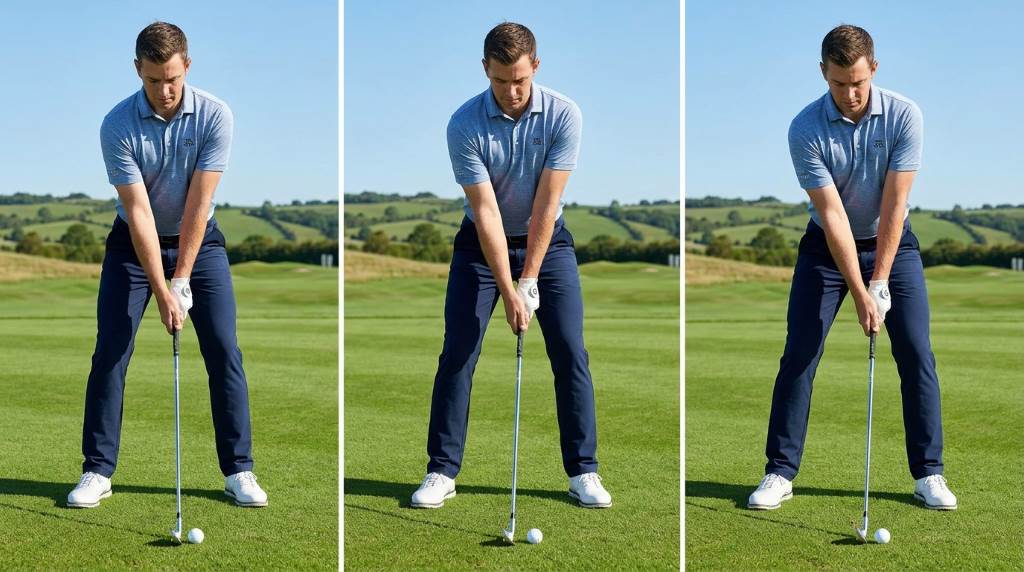
Develop Proper Ball Position
Ball position significantly affects contact quality and trajectory. Therefore, golfers must understand proper placement for each iron.
Short irons require positioning closer to the center of the stance. Meanwhile, longer irons perform better slightly forward.
- Pitching wedge: center
- 9 iron: center
- 7 iron: slightly forward
- 5 iron: further forward
Consistent positioning encourages repeatable swings and cleaner contact. As a result, golfers experience improved distance control.
Improve Your Setup Position
A strong setup creates the foundation for every successful golf shot. Therefore, golfers should establish proper posture before swinging.
Maintain slight knee flex and a straight back position. Additionally, keep your weight balanced evenly between both feet.
Your arms should hang naturally beneath your shoulders. Consequently, the club can move efficiently throughout the swing.
Master Center Face Contact
Many golfers focus exclusively on swing speed rather than contact quality. However, centered strikes produce superior results.
Practice drills that emphasize hitting the center of the clubface. Consequently, you will improve both distance and accuracy.
Useful Contact Drills
- Impact tape practice
- Tee gate drills
- Slow motion swings
- Half swing exercises
Better contact often adds more distance than increased swing effort. Therefore, prioritizing accuracy remains essential.
Control Your Tempo
Many amateur golfers swing too aggressively during iron shots. However, controlled tempo creates more reliable ball striking.
Professional golfers maintain consistent rhythm throughout the swing. Similarly, amateur players benefit from smoother transitions.
Count “one-two-three” mentally during practice swings. Consequently, you develop better timing and sequencing.
Learn to Compress the Golf Ball
Ball compression occurs when the club strikes the ball before the turf. Therefore, proper compression creates stronger and more controlled shots.
Focus on maintaining forward shaft lean through impact. Additionally, transfer body weight toward the lead side.
A compressed golf shot typically launches lower with increased spin control. As a result, golfers gain improved shot consistency.
Practice Distance Control Instead of Maximum Distance
Scoring improvements depend more on precision than raw distance. Therefore, golfers should prioritize consistent yardages.
Create a personal distance chart for every iron in your bag. Consequently, you develop greater confidence during course management decisions.
Create a Distance Matrix
- Full swing distance
- Three quarter swing distance
- Half swing distance
- Knockdown shot distance
Knowing multiple distances for each club increases scoring opportunities. Additionally, it improves strategic decision making.
Improve Course Management Skills
Better shots often result from smarter decisions rather than improved mechanics. Therefore, strategic thinking remains essential.
Avoid attacking difficult pin positions unnecessarily. Instead, target safer landing areas that reduce scoring risks.
Evaluate weather conditions, hazards, and lie quality before selecting an iron. Consequently, your decision making becomes more effective.
Practice Different Shot Types
Versatility improves overall golf performance significantly. Therefore, golfers should learn multiple iron shot variations.
Essential Iron Shots
- High approach shots
- Low punch shots
- Fade shots
- Draw shots
- Knockdown shots
Each shot serves a strategic purpose during competition. As a result, players gain confidence in challenging situations.
Use Technology During Practice
Modern golf technology provides valuable feedback for improvement. Therefore, incorporating data analysis accelerates development.
Launch monitors measure important performance metrics accurately. Additionally, swing analysis software identifies mechanical inefficiencies.
- Club speed
- Ball speed
- Launch angle
- Spin rate
- Carry distance
Reviewing performance data creates targeted improvement plans. Consequently, practice sessions become more productive.
Maintain Your Golf Irons Properly
Clean and well maintained irons perform more consistently. Therefore, regular equipment care remains important.
Clean grooves after every round using proper tools. Additionally, inspect grips and shafts regularly for wear.
Replacing worn grips improves control and confidence. As a result, golfers maintain consistent performance levels.
Build a Structured Practice Routine
Random practice rarely produces lasting improvements. Instead, structured sessions create measurable progress.
Divide practice time among mechanics, distance control, and course simulation. Consequently, skill development becomes balanced.
Sample Weekly Practice Plan
- Monday: Ball striking drills
- Wednesday: Distance control practice
- Friday: Shot shaping exercises
- Weekend: On course application
Consistent practice habits produce long term improvement. Therefore, discipline remains essential for better golf performance.
Conclusion
Learning how to hit better shots using the best golf irons requires proper equipment, technical development, and strategic thinking. By improving contact quality, refining swing fundamentals, and practicing with purpose, golfers can significantly improve their performance.
Start by evaluating your current irons, invest in professional fitting if possible, and apply these techniques consistently. With dedicated practice and smart decision making, you can achieve better shots and lower scores on every course.
Frequently Asked Questions
What type of golf irons are best for beginners?
Game improvement irons provide the best combination of forgiveness and distance assistance.
How often should I replace my golf irons?
Most golfers should evaluate replacement after seven to ten years of regular use.
Does club fitting really improve golf performance?
Yes, properly fitted clubs often improve accuracy, consistency, and distance control.
Should I swing harder with longer irons?
No, maintaining consistent tempo produces better results than swinging harder.
How can I improve iron shot consistency quickly?
Focus on center face contact, proper setup, and structured practice routines.