Choosing a Vieille Toddler Girl Jumpsuit comes down to four checks: accurate sizing, breathable fabric, quick diaper access, and safe construction. Get those right, and the outfit becomes a daily staple instead of a drawer filler. Most parents pick the print first and regret it later. Toddlers climb, crawl, and nap without warning, so the jumpsuit must stretch and open easily. Because sizing shifts between Vieille styles, reviewing a Vieille Toddler Girl Jumpsuit guide before ordering can prevent a return. From there, you can match fabric and closures to your child’s routine.
Choose a Vieille toddler girl jumpsuit by checking four things in order: the size chart for that specific style, the fabric content, the closure type, and the safety details. Measure your child at home before ordering, since sizes vary between designs. Then match the fabric to your climate and pick a closure you can manage quickly during changes.
Key Takeaways
- Measure height, chest, and torso length before you open any size chart.
- Jumpsuits have no waistband adjustment, so torso length matters more than width.
- Cotton and cotton blends breathe well, while fleece suits cold weather and layering.
- Snap closures speed up diaper changes, but zippers hold up better over time.
- Check every snap, button, and zipper pull for secure attachment before wearing.
- Wash in cold water with the zipper closed to protect seams and shape.
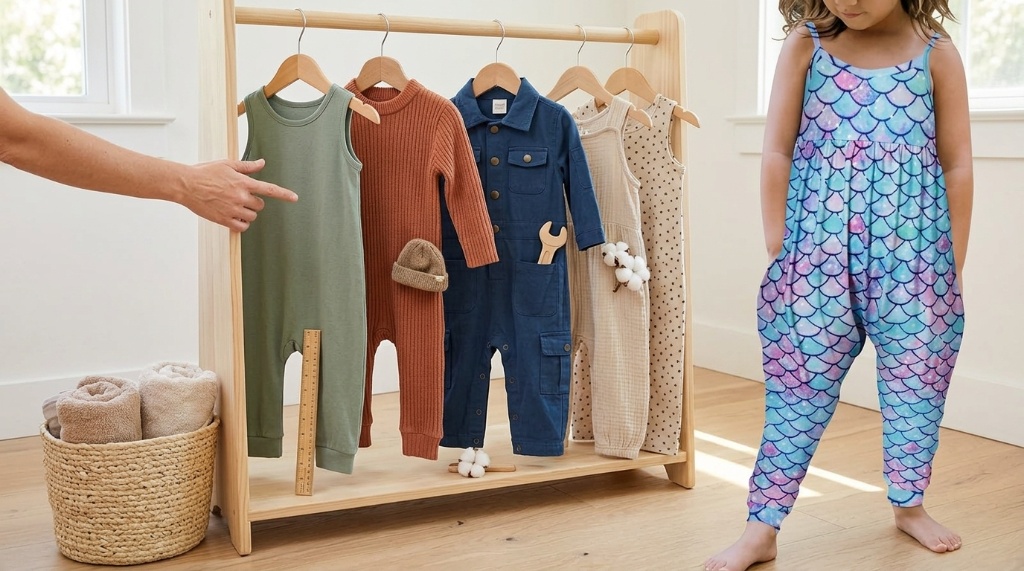
Why Fit Comes Before Every Other Decision
Fit decides whether a jumpsuit gets worn more than once. A one-piece garment has no waistband to adjust, so the torso length controls everything. If the torso runs short, the crotch rides up and the shoulders pull down. If it runs long, the fabric bunches at the knees and trips a walking toddler.
Vieille listings usually follow standard toddler sizing based on height and weight. Even so, cut varies by design, so always read the chart attached to that specific jumpsuit. Age labels are a rough guide at best. Two children the same age can differ by several inches in height.
How to Measure Your Toddler at Home
Grab a soft tape measure and a willing toddler, ideally right after a nap. Then follow these steps:
- Measure total height while your child stands against a wall.
- Measure chest circumference at the fullest point, keeping the tape level.
- Measure torso length from the shoulder seam line down to the crotch.
- Measure weight on a scale, since many charts list it alongside height.
Write the numbers down before you shop. Comparing them side by side with a size chart takes seconds. Also, note whether your child sits between two sizes. In that case, size up for length and accept slightly looser width.
Leaving Room to Grow Without Buying Too Big
A small allowance helps a jumpsuit last a season. Roughly one inch of extra length usually works well for toddlers. Beyond that, the fabric sags and creates tripping hazards on stairs.
Oversized jumpsuits also gap at the neckline. That gap lets cold air in and exposes shoulders to sun. Additionally, baggy legs catch on toys and furniture corners. If you want longevity, choose a style with cuffed ankles or adjustable straps when available.
Fabric Choices That Survive Toddler Life
Fabric determines comfort, durability, and how often you wash the jumpsuit. Cotton breathes and handles frequent laundering well. Stretch blends move with your child during climbing and squatting. Fleece adds warmth but dries slowly after spills.
| Fabric Type | Best For | Watch Out For |
|---|---|---|
| 100% cotton | Warm weather and sensitive skin | Shrinking in hot water or high heat |
| Cotton and spandex blend | Active toddlers who need stretch | Gradual loss of shape with harsh detergent |
| Jersey knit | Naps, car rides, and everyday play | Thin fabric that pills after many washes |
| Fleece or thermal knit | Cold weather and layering | Bulk under coats and slower drying |
For most families, a cotton blend covers the widest range of days. However, summer calls for lighter knit to prevent overheating. In winter, fleece works best as a base layer under a jacket. Always check the care tag, because some blends need gentler handling.
Closures and Diaper Access
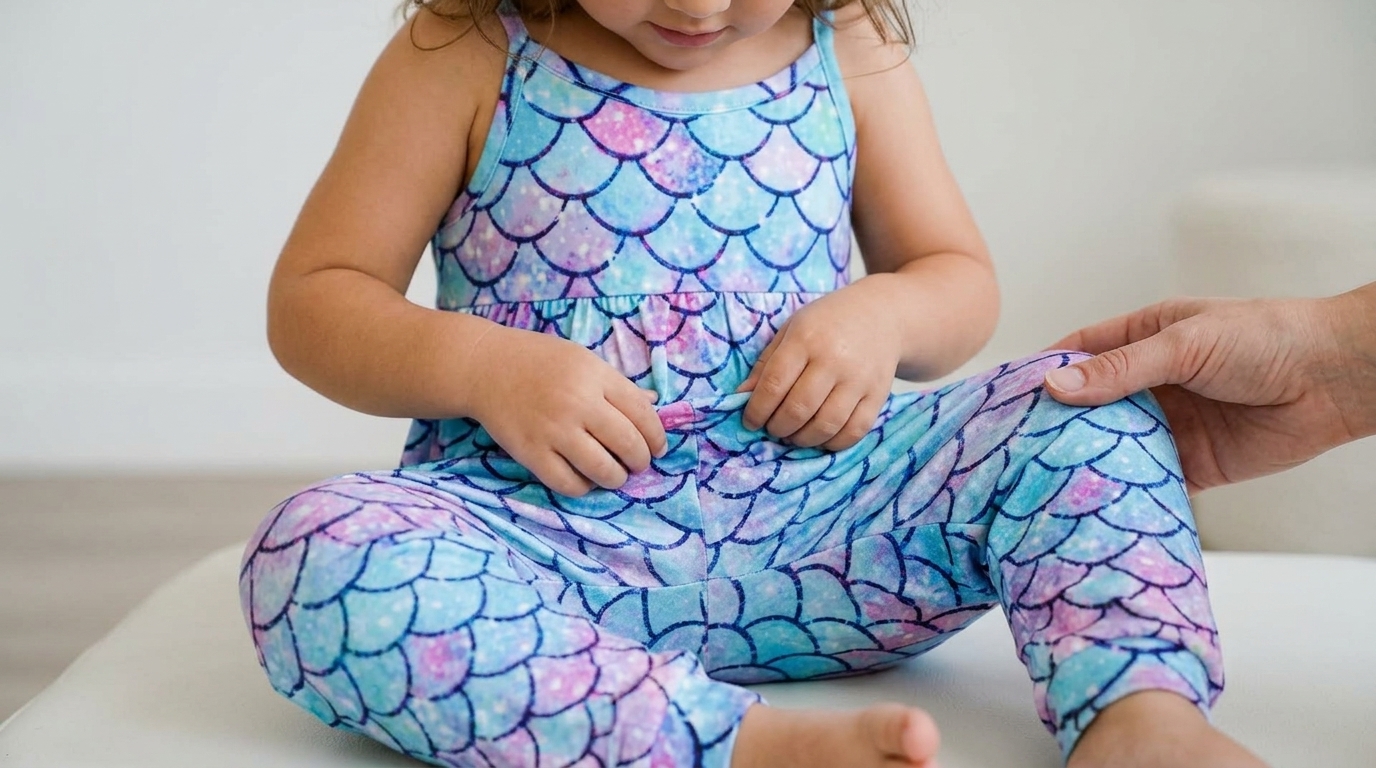
Closure design affects how fast you can change a diaper or help with potty training. Snap closures along the inner legs offer the quickest access. Zippers look neat and stay closed, yet they slow you down during urgent changes.
If your toddler is potty training, look for a jumpsuit with a loose fit and simple snaps. Pulling down a tight one-piece frustrates a child in a hurry. Meanwhile, zippers with a protective flap at the top prevent chin scratches. Buttons take the longest, so save those for older children.
Test the closure yourself before the first wear. Open and close it several times to check the tension. A stiff snap softens with use, but a weak one pops open during play.
Safety Details Most Parents Skip
Safety checks take a minute and prevent real problems. Tug each snap, button, and zipper pull to confirm it stays attached. Loose fasteners are choking hazards for toddlers who chew on clothing.
Avoid jumpsuits with long cords or drawstrings near the neck. Those cords can catch on crib rails, stroller frames, and playground equipment. Also, check the inside of the garment for scratchy tags or exposed seams. Finally, verify that any decorative applique is stitched down, not glued.
Matching the Jumpsuit to Season and Occasion
Season and setting shape which jumpsuit earns its place in rotation. Lightweight cotton suits summer playdates, park trips, and indoor days. Thermal knits handle autumn walks and chilly mornings.
For photos or family events, look for structured styles with a collar or ruffle. For daycare, choose dark colors and durable stitching that hide stains. Layering extends wear across seasons. A short-sleeve jumpsuit under a cardigan works in spring and fall alike.
Common Mistakes That Lead to Returns
Most returns trace back to a few predictable errors. Avoiding them saves shipping costs and disappointment.
- Buying by age label instead of the actual size chart
- Ignoring torso length when the jumpsuit has no waist adjustment
- Choosing a stiff fabric for a child who hates scratchy textures
- Overlooking closure type when daily changes happen several times
- Skipping the pre-wear safety check on snaps and buttons
Another frequent issue involves washing before the first wear. Some fabrics shrink slightly, so read the tag first. If the jumpsuit runs snug, return it before laundering. Once washed, many retailers refuse exchanges.
Care Tips That Keep the Shape
Proper care keeps a jumpsuit looking new through dozens of washes. Turn it inside out and close all zippers before laundering. Then wash in cold water on a gentle cycle with mild detergent.
Skip fabric softener on stretch blends, because it breaks down elasticity over time. Tumble dry on low or hang to dry, since high heat shrinks cotton. If the jumpsuit has appliques, dry it flat to protect the stitching. Treat stains promptly with cold water, because heat sets them permanently.
Frequently Asked Questions
Should I size up in a Vieille toddler girl jumpsuit?
Size up only when your child measures between two sizes or the chart shows a snug torso length.
Are snap closures better than zippers for toddlers?
Snaps win for diaper changes, while zippers last longer and stay closed during active play.
What fabric works best for sensitive toddler skin?
Soft cotton or a cotton blend with minimal dye works best for children prone to irritation.
How do I know if a jumpsuit is too big?
If the neckline gaps, the crotch sags, or your child trips on the legs, the jumpsuit is too large.
Can a toddler girl jumpsuit work for potty training?
Yes, provided the style has easy snaps and enough room for your child to pull it down quickly.
Conclusion
Choosing well comes down to measuring first, then matching fabric and closures to your daily routine. Prioritize torso length, since a one-piece garment has no waistband to fix a poor fit. Check every snap and zipper before the first wear, and follow the care tag to protect the shape. Once you have your measurements saved, compare a few Vieille styles side by side and order the one that fits your climate, your schedule, and your toddler’s comfort.