

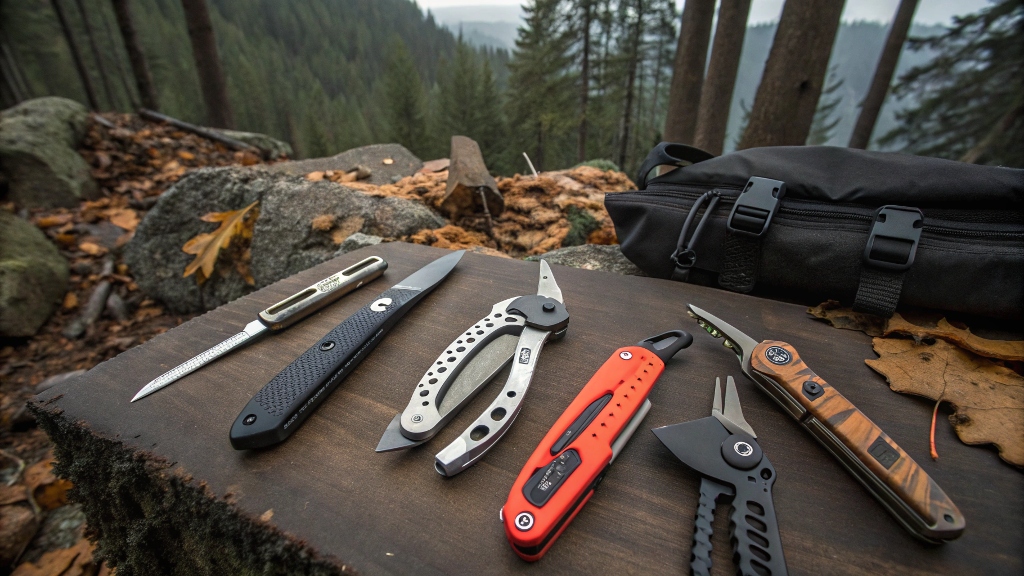
Multi-tools are indispensable for outdoor survival, combining multiple functions into a compact, portable device. From cutting rope to preparing food or repairing gear, a well-chosen multi-tool can be a lifesaver in the wilderness. With a detailed review, a proven method for decision-making, and FAQs, this article equips both novices and experts to select the ideal multi-tool.
History of Multi-Tools
Origins and Evolution
The multi-tool concept dates back centuries, with early examples like the Roman folding knife, which included a blade, spoon, and fork. However, the modern multi-tool emerged in the late 19th and early 20th centuries.
-
1880s: The Swiss Army Knife, patented by Karl Elsener in 1891, became the archetype for multi-tools, combining a blade, screwdriver, can opener, and awl.
-
1980s: Tim Leatherman introduced the Leatherman PST (Pocket Survival Tool), emphasizing pliers as the central feature, revolutionizing the market for rugged outdoor use.
-
1990s–2000s: Brands like Gerber, SOG, and Victorinox expanded offerings, incorporating specialized tools for military, camping, and survival scenarios.
Modern Developments
Today, multi-tools are tailored for specific activities, with modular designs and advanced materials like titanium and carbon fiber. The integration of technology, such as built-in USB chargers or GPS, reflects the evolving demands of outdoor enthusiasts.
Current State of Multi-Tools
Market Overview
The multi-tool market is diverse, with options ranging from budget-friendly models under $20 to premium tools exceeding $200. Leading brands include Leatherman, Victorinox, Gerber, and SOG, each offering unique features.
-
Leatherman: Known for durability and plier-based designs.
-
Victorinox: Focuses on compact, blade-centric Swiss Army Knives.
-
Gerber: Emphasizes lightweight, modular tools.
-
SOG: Popular for tactical and heavy-duty applications.
Consumer Trends
Outdoor enthusiasts prioritize portability, functionality, and reliability. Recent trends include:
-
Demand for lightweight materials to reduce pack weight.
-
Preference for customizable tools with interchangeable components.
-
Interest in eco-friendly manufacturing and sustainable materials.
Key Concepts for Choosing a Multi-Tool
Understanding Your Needs
Selecting a multi-tool begins with assessing your outdoor activities, environment, and skill level.
-
Activity Type:
-
Camping: Requires tools for cooking, tent setup, and fire preparation (e.g., knife, saw, can opener).
-
Hiking: Prioritizes lightweight tools for minor repairs and food prep.
-
Bushcraft: Needs robust tools like a strong blade, awl, and ferro rod.
-
-
Environment:
-
Forest: Tools for wood processing (saw, axe-like blade).
-
Desert: Emphasis on heat-resistant materials and hydration-related tools.
-
Mountain: Tools for rope work and gear repair.
-
-
Skill Level:
-
Beginners benefit from simple, user-friendly designs.
-
Experts may prefer specialized tools for advanced tasks.
-
Core Features to Evaluate
A multi-tool’s effectiveness depends on its features, materials, and design.
-
Tool Selection:
-
Essential Tools: Knife, pliers, screwdriver, scissors, can opener.
-
Specialized Tools: Wire cutters, ferro rod, fish scaler, or bit driver for versatility.
-
-
Material Quality:
-
Stainless Steel: Corrosion-resistant but heavier.
-
Titanium: Lightweight and durable but expensive.
-
Carbon Fiber: Strong and light but less common.
-
-
Size and Weight:
-
Compact models (under 4 inches folded) for ultralight hiking.
-
Full-size tools (4–6 inches) for heavy-duty tasks.
-
-
Locking Mechanism:
-
Locking blades prevent accidental closure during use.
-
Non-locking tools are lighter but riskier.
-
-
Ergonomics:
-
Comfortable grip for extended use.
-
One-handed operation for convenience in emergencies.
-
Portability vs. Functionality
Balancing portability and functionality is critical. A tool with 20+ functions may be too bulky for ultralight backpacking, while a minimalist tool may lack versatility.
-
Pocket-Sized Tools: Ideal for day hikes (e.g., Leatherman Micra, 2.5 oz).
-
Belt-Carry Tools: Suitable for extended trips (e.g., Leatherman Wave+, 8.5 oz).
-
Modular Systems: Allow users to add or remove tools based on needs.
Benefits of Multi-Tools in Outdoor Survival
Versatility
Multi-tools consolidate multiple functions, reducing the need to carry separate tools.
-
Perform tasks like cutting, screwing, prying, and fire-starting.
-
Adapt to unexpected challenges, such as repairing a torn backpack or preparing fish.
Space and Weight Efficiency
A single multi-tool replaces a toolbox, saving space in your pack.
-
Example: A Leatherman Signal (7.5 oz) includes 19 tools, equivalent to 2–3 lbs of individual tools.
Reliability in Emergencies
High-quality multi-tools are built to withstand harsh conditions.
-
Durable construction ensures functionality in rain, snow, or extreme heat.
-
Trusted by professionals like military personnel and first responders.
Challenges of Using Multi-Tools
Learning Curve
Multi-tools require practice to use effectively, especially for complex tasks like wire stripping or fish scaling.
-
Beginners may struggle with tool deployment or locking mechanisms.
-
Solution: Practice in non-emergency settings to build familiarity.
Maintenance Requirements
Multi-tools need regular cleaning and sharpening to maintain performance.
-
Cleaning: Remove dirt and moisture to prevent rust.
-
Sharpening: Use a whetstone or portable sharpener for blades.
-
Lubrication: Apply oil to hinges for smooth operation.
Trade-Offs in Specialization
Multi-tools are jacks-of-all-trades but may lack the precision of dedicated tools.
-
Example: A multi-tool knife is less effective for filleting fish than a dedicated fillet knife.
-
Solution: Pair with specialized tools for critical tasks.
Review: Top Multi-Tools for Outdoor Survival
Leatherman Signal
-
Price: ~$130
-
Weight: 7.5 oz
-
Tools: 19 (knife, pliers, saw, ferro rod, whistle, etc.)
-
Pros: Comprehensive toolset, survival-specific features, durable stainless steel.
-
Cons: Heavier than minimalist options, premium price.
Victorinox Swiss Army Huntsman
-
Price: ~$40
-
Weight: 3.5 oz
-
Tools: 15 (knife, scissors, saw, screwdriver, etc.)
-
Pros: Lightweight, affordable, reliable for light-duty tasks.
-
Cons: No pliers, less robust for heavy-duty use.
Gerber Suspension-NXT
-
Price: ~$50
-
Weight: 6.7 oz
-
Tools: 15 (pliers, knife, scissors, wire cutter, etc.)
-
Pros: Budget-friendly, spring-loaded pliers, slim design.
-
Cons: Fewer survival-specific tools, moderate durability.
Comparison Table
|
Feature/Model |
Leatherman Signal |
Victorinox Huntsman |
Gerber Suspension-NXT |
|---|---|---|---|
|
Price |
$130 | $40 | $50 |
|
Weight |
7.5 oz |
3.5 oz |
6.7 oz |
|
Number of Tools |
19 | 15 | 15 |
|
Key Survival Tools |
Ferro rod, whistle |
Saw, knife |
Pliers, wire cutter |
|
Material |
Stainless Steel |
Stainless Steel |
Stainless Steel |
|
Best For |
All-around survival |
Lightweight hiking |
Budget-conscious users |
Proven Method: Decision-Making Framework
To choose the best multi-tool, follow this structured approach:
-
Define Your Needs:
-
List activities (e.g., camping, bushcraft).
-
Identify critical tools (e.g., knife, pliers).
-
-
Set a Budget:
-
Budget: $20–$50 (e.g., Gerber Suspension-NXT).
-
Mid-range: $50–$100 (e.g., Leatherman Wingman).
-
Premium: $100+ (e.g., Leatherman Signal).
-
-
Evaluate Features:
-
Prioritize tools based on your activities.
-
Check material quality and locking mechanisms.
-
-
Test Portability:
-
Ensure the tool fits your carry method (pocket, belt, backpack).
-
Verify weight aligns with your pack goals.
-
-
Read Reviews and Test:
-
Check user feedback for durability and real-world performance.
-
If possible, handle the tool in-store to assess ergonomics.
-
-
Plan for Maintenance:
-
Invest in a sharpening kit and cleaning supplies.
-
Schedule regular maintenance checks.
-
This method ensures a data-driven decision tailored to your needs, balancing cost, functionality, and practicality.
Future Trends in Multi-Tools
Technological Integration
Multi-tools are incorporating smart features to enhance utility.
-
Embedded Sensors: GPS, temperature gauges, or altimeters for navigation.
-
Power Banks: Built-in USB chargers for emergency device charging.
-
LED Lights: Integrated lighting for low-visibility conditions.
Sustainable Manufacturing
Brands are adopting eco-friendly practices to appeal to environmentally conscious consumers.
-
Recycled Materials: Use of recycled steel or biodegradable plastics.
-
Modular Designs: Reduce waste by allowing tool replacement instead of full-unit disposal.
Customization and 3D Printing
Advancements in manufacturing enable personalized multi-tools.
-
Custom Toolsets: Users can select specific tools for their needs.
-
3D-Printed Components: Affordable, lightweight parts for repairs or upgrades.
5 FAQs About Choosing a Multi-Tool for Outdoor Survival
1. What is the most important tool in a multi-tool for survival?
The knife is typically the most critical, as it handles cutting, food prep, and crafting. However, pliers are equally vital for tasks like gear repair or gripping.
2. Are expensive multi-tools worth the investment?
Premium multi-tools (e.g., Leatherman Signal) offer superior durability, more tools, and survival-specific features, making them worth the cost for frequent outdoor use. Budget options suffice for casual trips.
3. How do I maintain a multi-tool in the field?
Clean with water and a brush to remove dirt, dry thoroughly to prevent rust, and apply a light lubricant to hinges. Carry a portable sharpener for blade maintenance.
4. Can a multi-tool replace dedicated survival tools?
Multi-tools are versatile but may not match the precision of specialized tool for outdoor survival(e.g., a dedicated saw). Use them as a primary tool but supplement with task-specific gear for complex tasks.
5. What’s the best multi-tool for ultralight backpacking?
The Victorinox Swiss Army Classic SD (1.1 oz) or Leatherman Micra (1.8 oz) are ideal for ultralight hikers due to their compact size and essential tools.
Read More Also: How to Keep Silver Jewelry from Tarnishing
Conclusion
Choosing the best multi-tool for outdoor survival requires balancing functionality, portability, and durability with your specific needs. By understanding the history, evaluating key features, and applying a proven decision-making framework, you can select a tool that enhances your safety and efficiency in the wilderness. As tool for outdoor survival evolve with technological and sustainable innovations, they remain a cornerstone of outdoor preparedness. Whether you’re a novice camper or a seasoned bushcrafter, the right multi-tool is an investment in your survival and success.


